
Paper No. 1
The Moment You Decide to Write a Book, Writing Changes
A reflection on the subtle shift that changes everything — and how to return to writing that is honest, not performative.
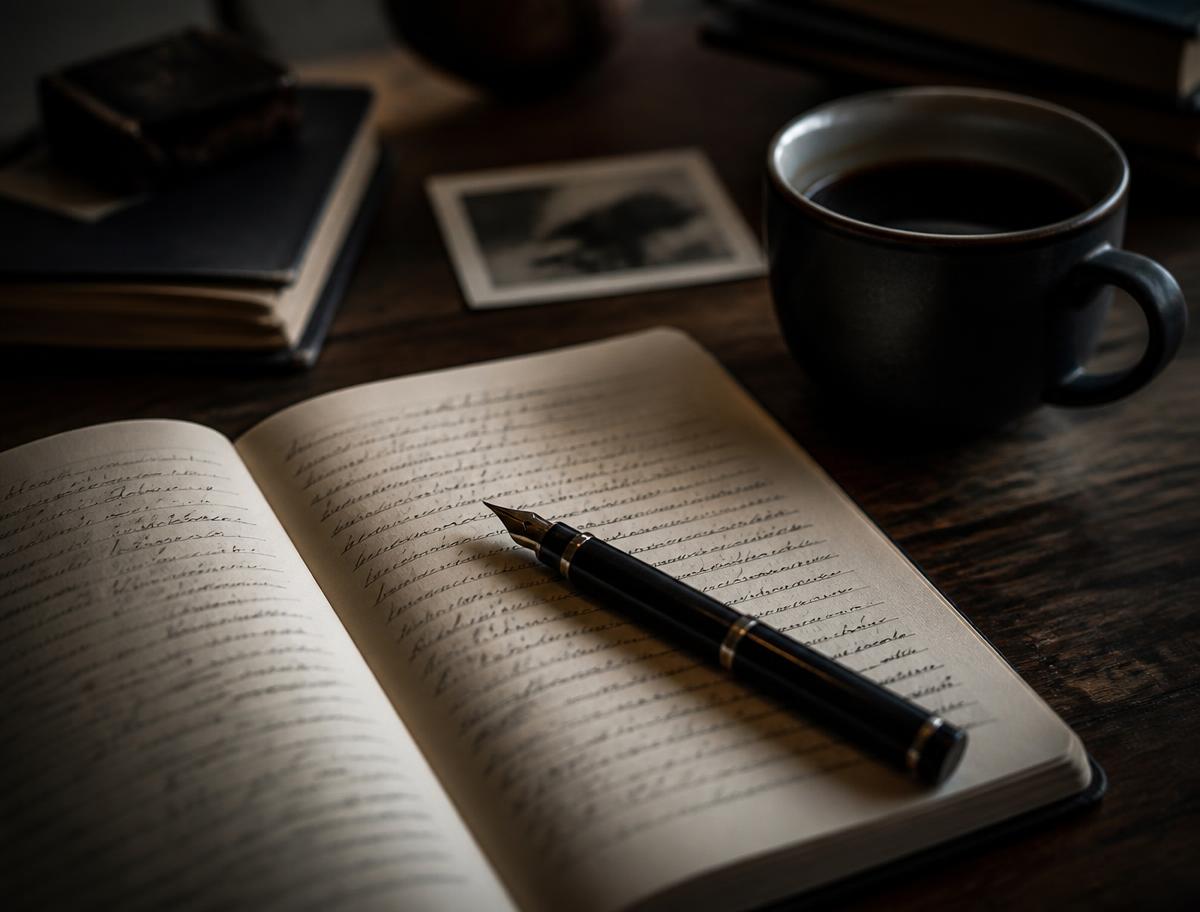
Writing, for many of us, began as something we did freely — until we decided to write a book, and the freedom quietly gave way to expectation, judgment and the imagined reader. Before craft, publication and audience enter the picture, there is a quieter question worth returning to: what did you want to say in the first place?
For many of us, there was a time when writing asked very little. We wrote wherever we could find space for it—on the backs of notebooks, on random pieces of paper, in writing pads, on greeting cards and in diaries we never quite managed to maintain. There was no plan, no process and no thought of publication. Writing was simply a place to put things we wanted to say.
Perhaps that is why it came so easily. The page did not ask whether the words were good enough. There was no reader waiting at the other end of them and no expectation that what we wrote had to become something. We could write badly, change our minds halfway through, leave things unfinished or say exactly what we meant without wondering whether anyone would agree. Writing felt, in some ways, like talking to a friend who listened patiently and without judgment.
And then, somewhere along the way, the thought appears: perhaps we should write a book.
It is an ordinary enough thought. For many people, it begins as a desire they have carried quietly for years. But we have come to believe that the moment we decide we are not simply writing, but writing a book, something changes. The act of writing begins to carry a different kind of weight.
When the Reader Arrives Too Early
Until then, writing may have belonged entirely to us. We write because a thought will not leave us alone; because something happened that we need to understand; because we have a story we want to tell, a perspective we want to examine or a memory we want to preserve.
Then the idea of a book enters. And almost immediately, another person enters with it: the reader.
Will they want to read this? Will this interest anyone? Is this good enough to be a book? What if people do not like it? What if they judge me?
The questions themselves are not unreasonable. A book is, after all, eventually meant to be read. But there is a difference between allowing the reader to meet the work when it is ready and inviting the reader into the room before we have even found out what we want to say.
The imagined reader can be a demanding presence. Before long, we begin adjusting our thoughts in anticipation of them.
We explain more than we need to. We choose the safer observation over the truer one. We reach for what sounds important instead of following what genuinely matters to us. Gradually, the desire to express can give way to the desire to impress.
And that may be where writing becomes harder than it was before.
The Pressure to Write Something Worth Reading
The moment we call ourselves aspiring authors, writing can acquire another layer of expectation. A paragraph is no longer just a paragraph; it is part of a manuscript. A manuscript is no longer simply a collection of pages; it might one day become a book. And a book, we begin to imagine, will be judged—by readers, editors, publishers, reviewers and perhaps even by the people who know us.
So we start asking questions that belong much further down the road. Will this resonate? Is there a market for it? Who is my audience? Could this be published? Could it sell?
These questions have their place. Every book that enters the world will eventually encounter practical realities. But they need not determine the first conversation between a writer and a blank page.
Before an idea becomes a publishing proposition, before a manuscript becomes a book and before that book finds its readers, there has to be something worth saying. And the person best placed to begin discovering what that is is the writer—not an imagined audience, not the market and not the fear of getting it wrong.
What Happens to the Voice?
We sometimes speak about finding one's voice as though it is hidden somewhere outside us, waiting to be discovered. Perhaps it is not. Perhaps our voice is already being shaped, quietly and continuously, by everything we have lived through: what we noticed that someone else did not, what moved us, what unsettled us, and the questions we have carried without answers.
No one else has lived exactly from where we have stood. That does not mean every experience deserves to become a book, nor does it mean that everything we write will be meaningful simply because it is personal. But it does mean that imitation cannot be the starting point of an authentic voice.
Authentic writing has to carry something of the person behind it: their way of seeing, their way of making meaning and their particular relationship with the story they are trying to tell.
This is not an argument against craft. Craft matters enormously. So do feedback and revision. A first draft is not sacred merely because it came from an authentic place. But there is a difference between refining what you have to say and abandoning it in the effort to sound like someone worth reading. The former can help a voice become clearer. The latter can slowly make it disappear.
The Weight of Becoming a Serious Writer
There is another pressure that often arrives with the decision to write a book: the pressure to become a serious writer. Now, we think, we need a routine, the right desk, long uninterrupted hours, a special kind of discipline or the perfect state of mind. And because life rarely offers all of these at once, writing gets postponed.
Until there is more time. Until work is less demanding. Until life is quieter. Until inspiration returns.
The future date keeps moving.
Creativity cannot simply be commanded into existence. But neither do we have to wait for ideal conditions before allowing ourselves to write. Writing is, in one sense, a practice of returning. We return to the page, write a little, stop and return again. Slowly, the page may become less intimidating—not because we have solved writing, but because we have stopped standing outside it, waiting to feel ready.
Discipline matters. But it should not become one more way of making every encounter with the page prove something.
The Reader Still Matters. Just Not Yet.
None of this means the reader should never enter the room. A book is not complete simply because an author has finished saying what they wanted to say. Writing is an act of expression, but a book is also an act of connection.
At some point, the writer must step back and ask different questions. Is this clear? Have I said what I think I have said? Where might a reader lose me? What have I assumed they know? What does this work need in order to become the best version of itself?
This is where distance, revision, feedback and craft begin to matter in different ways. And eventually, a book does have to find its readers.
But the sequence matters. The responsibility to write honestly and the responsibility to help the work connect with its readers are not in conflict. They simply belong to different moments in the journey. The difficulty begins when we reverse them—when we try to anticipate what readers might want before we have listened closely enough to what we ourselves, and the work itself, are trying to say.
A Pause Before You Begin
If you have been wanting to write a book for years, perhaps you recognise some of this. You once wrote freely. Then you decided to write a book, and suddenly the stakes became higher. The questions multiplied.
Perhaps you have not started because you do not know where to begin. Perhaps you started and stopped because what once came naturally now feels like something you have to perform. Perhaps you have a story you have carried for years but are waiting until you can be certain it will matter to someone else.
If so, perhaps the answer is not to stop caring about the reader. Perhaps it is simply to let them wait outside the room for a little while.
Go back to the moment before writing had to become anything. Before the manuscript, before the market and before the question of whether it would ever be published. Return to the thought, the story, the question or the experience that made you want to write in the first place.
You do not have to know yet whether the book will resonate, whether it will be published or who will read it. Those are important questions. They are just not necessarily the first ones.
Perhaps the first question is simpler: what is it that only you can say in the way you can say it?
Start there. Let the writing be free enough to find its own shape before asking it to carry the weight of becoming a book. Because sometimes, the moment we decide to write a book, we stop writing freely. And perhaps becoming an author begins with learning how to find that freedom again.