
Paper No. 2
The Desire to Express Can Slowly Become the Desire to Impress
A reflection on how the pursuit of better writing can quietly turn expression into performance—and how writers can return to what they meant to say.
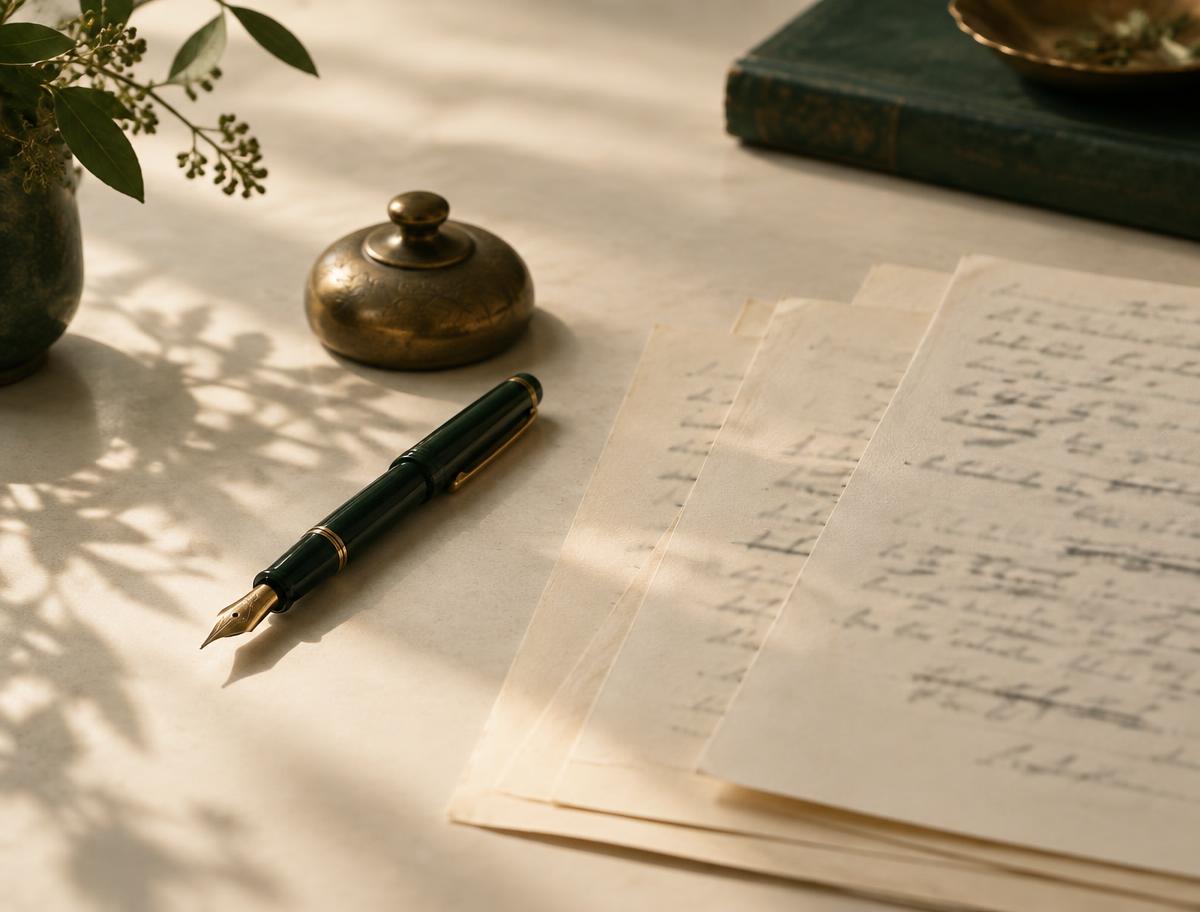
The pursuit of better writing can sometimes lead us away from the very thing we wanted to say.
There is a particular moment in the life of a piece of writing when the question changes.
It may begin with something relatively uncomplicated: a thought we want to make sense of, an experience we want to examine, a story we feel compelled to tell. The writing begins because there is something we want to express. The question, if there is one at this stage, is a quiet one: what am I trying to say?
But once we begin taking the writing seriously, another set of questions can gradually take over. Is this good enough? Does this sound like good writing? Is the idea original enough? Is the language strong enough? Will this make an impression?
None of these questions is wrong. In fact, some are essential. Writing asks us to return to what we have written, question it, reshape it and learn how to say things better. Few worthwhile pieces of writing emerge fully formed.
The difficulty lies elsewhere.
It begins when we become so concerned with producing something impressive that the need to appear to have written well starts competing with the reason we began writing at all.
The shift is easy to miss. We may still be working hard on the same piece. We may even believe we are making it better. But slowly, the centre of gravity can move—from what we are trying to express to how successfully we are expressing it.
And when that happens, the desire to express can slowly become the desire to impress.
The Idea of What Good Writing Should Sound Like
Perhaps this shift begins with a perfectly reasonable ambition: we want to become better writers.
We read writers whose work we admire. We begin to notice the precision of a sentence, the restraint of a paragraph, the way an ordinary observation can acquire unexpected meaning in the hands of someone who knows what they are doing. We study craft. We learn about structure, character, pace and voice. We become more discerning readers of our own work.
All of this matters.
But learning what good writing can do can also leave us with an increasingly fixed idea of what good writing should sound like. And once that idea takes hold, our own natural way of saying something can begin to seem inadequate.
Perhaps the language is too simple. The observation too ordinary. The thought insufficiently profound.
So we reach for something more polished. More literary. More intelligent. More important.
Sometimes, this is exactly what the work needs. But sometimes we are no longer finding a clearer way to say what we mean. We are trying to make what we mean sound like the kind of thing a good writer would say.
The desire to impress does not always announce itself as vanity. Often, it disguises itself as the pursuit of better writing.
That distinction matters because the two can look remarkably similar from the outside. Both involve revision. Both may involve cutting, rewriting, learning and improving. But they begin from different places.
One asks: What is the clearest, truest way to say this?
The other asks: What will make this sound impressive?
The difference is not always immediately visible in the writing. Over time, however, it can change what we allow ourselves to say.
When We Begin Editing for Approval
The desire to impress does not necessarily make us write badly. If anything, it can make us excessively careful.
We may make an observation more dramatic because the quieter version does not feel important enough. We may add complexity because simplicity seems too obvious. We may explain what could have been left unsaid because we do not trust a reader to recognise its meaning. We may soften a conviction because we anticipate disagreement, or abandon an idea because we are unsure whether we have earned the right to express it.
None of this is necessarily conscious. That is partly what makes the shift so difficult to recognise.
The work still feels like ours. We are still choosing the words. We are still making the decisions. Yet those decisions may increasingly be shaped by an invisible standard of approval—an idea of what readers, critics, editors or other writers might consider worthy.
We try to satisfy all of them before any of them have read a word. In the process, the work can become increasingly careful—and increasingly distant from the reason it began.
The question is not whether we are refining the work. It is what we are refining it towards.
Are we trying to make the work clearer? Are we following an idea more honestly? Are we cutting something because it distracts from what matters, or adding something because without it we fear the writing will not seem substantial enough?
These are not questions with easy answers. Nor are they questions a writer can resolve once and never return to. The line between craft and performance is rarely obvious. It can move within the same piece of writing, and perhaps even within the same sentence.
But the questions themselves can help us notice when the work has begun to serve a purpose other than its own.
What Cannot Be Borrowed
This is not an argument against influence.
No writer develops in isolation. We learn by reading. We absorb rhythms, possibilities and ways of seeing from the work of others. The writers we admire can show us what language is capable of and expand our understanding of what we might attempt ourselves.
But influence and imitation are not the same thing.
A writer can borrow techniques without borrowing a voice. We can learn from another writer's precision without trying to reproduce their intelligence on the page. We can admire a particular style without assuming that style is the measure against which our own writing must be judged.
Authentic writing is not simply a sum total of secondary information wrapped in nuanced language. It has to carry something that has passed through the writer—their own experience, reflection, questioning and way of seeing.
This does not mean every piece of writing must be personal or autobiographical. A writer may create a world they have never inhabited, tell a story drawn entirely from imagination or explore a subject through years of research. But the work still has to be shaped by a mind that is doing more than assembling what it has gathered elsewhere.
Somewhere, there has to be a perspective that is genuinely its own.
Perhaps that is what makes voice so difficult to manufacture. It cannot be created merely by adopting the outward characteristics of writing we admire. It emerges, over time, from what we notice, what we question, what we choose to care about and how we make meaning of what we encounter.
Craft can give that voice greater clarity.
It cannot replace the reason for its existence.
Not Everything Has to Perform Its Importance
The pressure to impress can also change what we consider worth writing about.
We may begin looking for ideas that seem sufficiently important, stories that appear large enough or subjects we can imagine being taken seriously. The quieter thought can seem too small. The familiar experience too ordinary. A book, we tell ourselves, must surely begin with something more significant.
But significance does not always announce itself in advance.
A familiar experience, examined with enough honesty, can reveal something we had not seen before. A seemingly small question can stay with a reader longer than a grand declaration. And a perspective does not become valuable only when we can predict how many people will agree with it.
There is a tendency to confuse scale with worth. To assume that writing must aspire to universal relevance before it has earned the right to exist.
But perhaps a writer's first responsibility is not to decide how important the work will be. It is to pay close enough attention to what they have genuinely seen, understood, questioned or imagined—and then give it the best form they can.
What happens after that cannot be entirely controlled.
The work will eventually meet readers. It may travel further than its author expected, or remain meaningful to only a few. But trying to predict the scale of its response too early can tempt us to choose ideas for their anticipated impact rather than for the truth we are able to bring to them.
Returning to the Work
None of this asks writers to become indifferent to quality, recognition or success.
We want the work to be good. We want to improve. We may hope that it will be published, read and valued. There is nothing false about ambition, and there is no virtue in pretending otherwise.
The question is what happens when ambition begins to direct the writing itself.
Are we making this piece stronger, or merely making it more impressive?
Are we learning from writers we admire, or trying to sound like them?
Are we refining the work because we understand it better now, or because we are increasingly afraid of how it might be judged?
Perhaps the answer will not always be clear. Writing rarely offers such certainty. But returning to these questions can help us distinguish between the work we genuinely want to create and the performance we may gradually begin constructing around it.
The desire to impress is understandable. To write is, eventually, to allow ourselves to be seen.
But perhaps that is precisely why the desire to express must be protected.
Not from craft. Not from revision. Not from ambition.
But from the point at which all of these begin to obscure the thing we came to the page to say.
Because writing can be polished until it is admired.
It can also be refined until it becomes more fully itself.
The difference may lie in remembering what the work was trying to become before we became so concerned with what it might make of us.